
LAS VEGAS: WHEN THE ENTERTAINMENT CAPITAL STOPS BETTING ON ENTERTAINERS

From Black legends who once couldn't sleep in the hotels where they performed to today's artists fighting for pay, opportunity and investment—the complicated past, changing present and uncertain future of entertainment in Las Vegas.
By Miss Hollywood | The MissHollywoodMediaNetwork September 2026

For generations, Las Vegas has sold one thing perhaps better than any other city in America:
Entertainment.
The casinos mattered. The gambling mattered. The hotels mattered.
But Vegas was also where you went to see somebody.
Singers. Dancers. Comedians. Musicians. Magicians. Showgirls. Acrobats. Impersonators. Headliners. And thousands of unknown performers hoping that one night on a Las Vegas stage might become the night that changed everything.
Las Vegas didn't simply have entertainment.
It branded itself the Entertainment Capital of the World.
But in 2026, there is a growing question hanging over those famous lights:
What is happening to Las Vegas entertainment?
Major productions are closing. Hundreds of workers have been affected. Performers are talking about inadequate compensation and fewer meaningful opportunities. Tourists have more attractions competing for every discretionary dollar. And resort operators are increasingly operating in a Las Vegas where professional sports, celebrity residencies, stadium concerts and massive destination events can command enormous attention.
Yet before we discuss where Las Vegas entertainment is going, there's something important we need to understand.
Where it came from.
Because Las Vegas has had a complicated relationship with entertainers for a very long time.
And perhaps no group demonstrates that contradiction more powerfully than the Black entertainers who helped make Las Vegas famous.
BEFORE THE GLAMOUR, THERE WAS AN UGLY TRUTH
When we romanticize old Las Vegas, we remember the photographs.
The Sands.
The Flamingo.
The Copa Room.
The showgirls.
The tuxedos.
The champagne.
The Rat Pack.
The marquees.
But there was another Las Vegas existing alongside all that glamour.
A segregated one.
Black entertainers could be hired to perform for white audiences inside some of the city's premier establishments while facing restrictions on eating, gambling, socializing or sleeping in those same establishments.
UNLV's Oral History Research Center documents the painful contradiction directly: Black performers could entertain inside a hotel and then be unable to eat or stay there. They often had to travel to Las Vegas's historically Black Westside for a full meal, entertainment or accommodations.
Think about what that actually meant.
Good enough to appear on the marquee.
Good enough to fill the showroom.
Good enough to make the casino money.
But not always good enough to sleep upstairs.
SAMMY DAVIS JR., NAT KING COLE, PEARL BAILEY—THEY WERE PART OF THE STORY
And we're not talking about obscure performers.
We're talking about some of the most important entertainers in American history.
Sammy Davis Jr.
Nat King Cole.
Pearl Bailey.
Harry Belafonte.
Count Basie.
Josephine Baker.
Johnny Mathis.
Hazel Scott.
Other Black performers whose Vegas histories intersected with the segregation era included Lena Horne, Eartha Kitt and Louis Armstrong.
These were artists capable of drawing audiences and generating money.
UNLV historian Claytee White has emphasized that Vegas wanted these entertainers precisely because they were major attractions as the city developed its international entertainment reputation.
Yet fame did not automatically erase racism.
That's what makes this history so disturbing.
You could become famous enough for Las Vegas to sell tickets using your name without necessarily becoming Black enough for Las Vegas to forget that you were Black.
SAMMY DAVIS JR. WASN'T JUST ENTERTAINING VEGAS—HE HELPED CHANGE IT

Sammy Davis Jr. deserves special recognition in this history.
He first performed in Las Vegas as part of the Will Mastin Trio, alongside Will Mastin and Sammy Davis Sr., and became one of the most important Black entertainers associated with the city.
But Sammy's importance extended beyond the stage.
UNLV identifies Davis as a particularly significant entertainer-advocate in the struggle against discrimination in Las Vegas. He supported local efforts for equality and later participated in protests connected to the welfare-rights movement.
The history becomes even more complicated as casino policies gradually began changing.
Some superstar Black entertainers eventually gained privileges that other Black performers—and sometimes even members of their own bands—still did not have.
UNLV oral-history material records, for example, accounts of Sammy Davis Jr. and Nat King Cole eventually being able to stay at properties while Black band members could still be relegated to the Westside.
In other words, celebrity could occasionally punch a hole through the color barrier.
But it didn't automatically remove the barrier for everybody else.
LENA HORNE WAS THERE NEAR THE BEGINNING
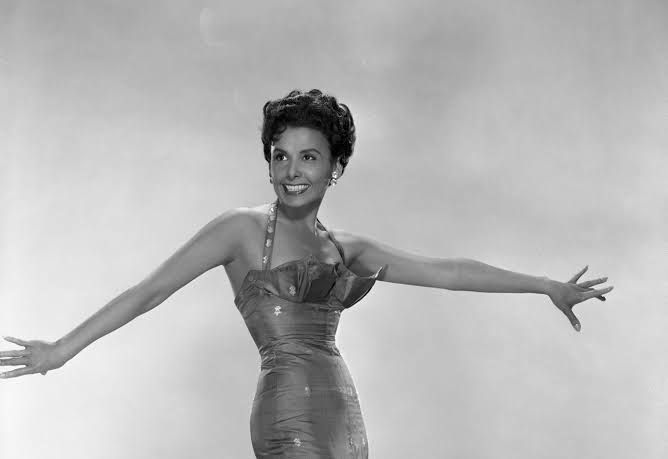
Lena Horne's story shows how inconsistent Las Vegas's racial practices could be.
Historical research in UNLV's Special Collections identifies Horne as the first Black entertainer to star at the Flamingo, beginning an engagement in January 1947.
She received accommodations there.
But later that same year, when Pearl Bailey performed at the Flamingo, Bailey had to secure housing in the developing Black Westside.
Researchers concluded that the hotel's racial policy had changed during that period.
That detail matters because segregation in Las Vegas wasn't always a neat story where every property followed precisely the same rule every year.
Policies changed.
Exceptions were made.
Stars pushed boundaries.
Casino owners relented in some situations and resisted in others.
But the broader system remained discriminatory.
NAT KING COLE COULD PACK A ROOM AND STILL FACE HUMILIATION
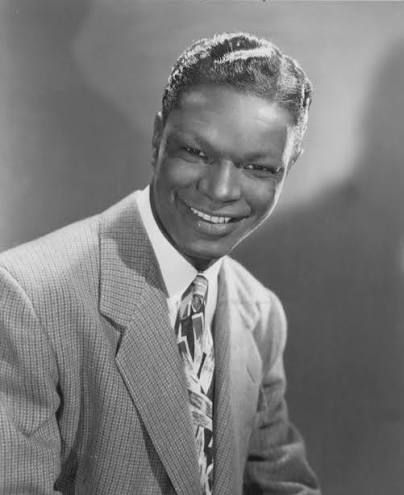
Then consider Nat King Cole.
One of the most recognizable voices in American music.
A superstar.
UNLV's historical research describes Cole as one of the earliest Strip entertainers earning around $50,000 per week, an extraordinary sum for the era. He eventually became one of the first Black entertainers permitted to stay at a property where he performed.
But getting there wasn't simple.
Historical material preserved by UNLV describes earlier periods when Cole could headline a hotel while still facing severe restrictions on where he could stay and where he could go within the property.
That's worth remembering when we tell the glamorous story of classic Las Vegas.
The same city celebrating a man's voice could still humiliate the man attached to it.
THE “MISSISSIPPI OF THE WEST”
There is a phrase associated with this part of Las Vegas history that many tourists—and probably many Americans—have never heard.
“The Mississippi of the West.”

UNLV historian Tyler D. Parry has explained that Las Vegas earned that reputation because of its rigid racial segregation.
Black business owners faced restrictions. Housing covenants limited where Black residents could purchase homes. The Westside developed into the center of Black life partly because African Americans were pushed there by discriminatory practices.
Parry notes an important historical distinction: segregation in Nevada wasn't mandated through precisely the same state-law structure found in states such as Louisiana and Mississippi.
But in daily life, he says, it could mirror Jim Crow practices in the South.
So, when people tell the story of vintage Vegas exclusively through glamorous casino photographs, they're only telling half the story.
WHEN THE SHOW ENDED, BLACK ENTERTAINERS WENT TO THE WESTSIDE
Imagine performing for hundreds of people.
The lights go down.
The audience applauds.
Maybe your name is outside.
Maybe people paid serious money to see you.
Then you leave the property because you can't stay there.
Where do you go?
For many Black travelers and entertainers, the answer was Las Vegas's Westside.
And one small building became an extraordinarily important part of that history.
HARRISON'S GUEST HOUSE: SAFETY AWAY FROM THE STRIP
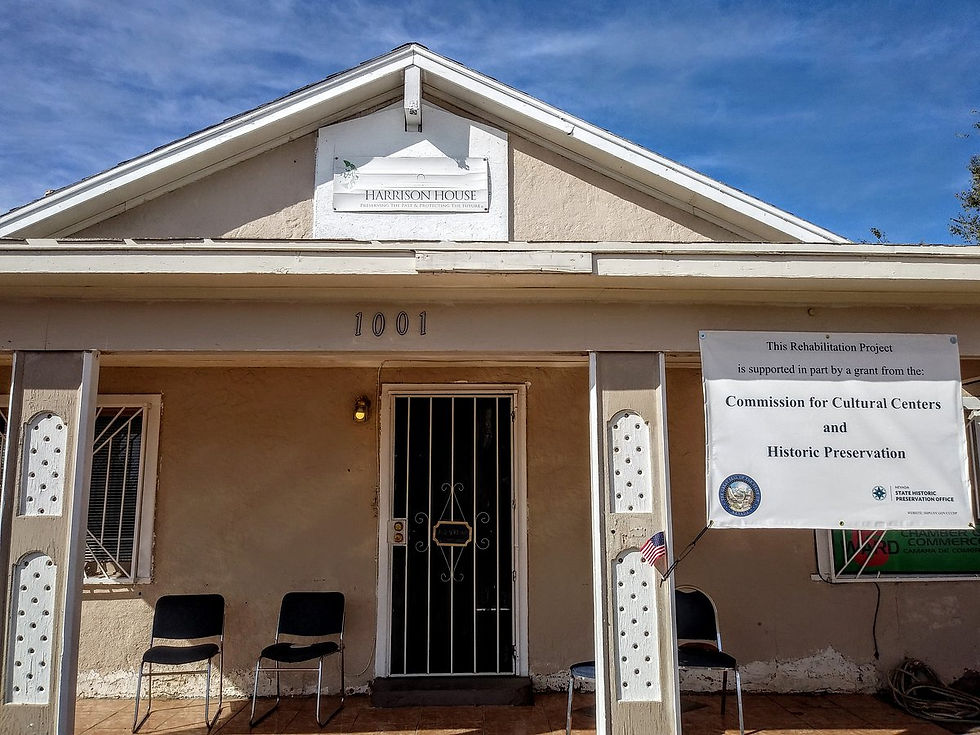
At 1001 F Street stood Harrison's Guest House.
It wasn't a sprawling Strip resort.
There was no enormous casino downstairs.
No giant marquee.
No luxury showroom.
But it provided something Black entertainers desperately needed:
A place to stay.
The National Park Service records that Harrison's Guest House commonly accommodated Black entertainers and travelers during segregation.
Among the famous entertainers associated with Harrison's were:
Nat King Cole.
Pearl Bailey.
Sammy Davis Jr.
Let that sink in.
Some of the biggest Black stars in America could help fill Las Vegas showrooms but still depend upon a boarding house on the Westside for accommodations.
The National Park Service explains that boarding houses such as Harrison's emerged from a much larger national necessity. Segregation in public accommodations meant Black travelers needed separate lodging options and social networks to identify places where they could safely stay.
Harrison's wasn't simply a house.
It represented refuge, dignity and community in a city that wanted Black talent without consistently extending equal treatment to Black people.
THE WESTSIDE BECAME PART OF VEGAS ENTERTAINMENT CULTURE
There was an unintended consequence.
Because Black entertainers couldn't fully participate in Strip life, they spent significant time within Las Vegas's Black community.
They slept there.
They ate there.
They socialized there.
They interacted with residents.
UNLV historian Claytee White has explained that entertainers working extended Vegas engagements might spend that time within the Westside community because the hotels where they performed couldn't accommodate them equally.
So, the Westside became more than somewhere performers were forced to go.
It became part of Las Vegas's Black cultural ecosystem.
And then, in 1955, something extraordinary happened.
THE MOULIN ROUGE CHANGED EVERYTHING

On May 24, 1955, the Moulin Rouge Hotel and Casino opened.
It became Las Vegas's first major interracial gaming establishment.
Black people could enter.
White people could enter.
Black performers could work there.
Black employees could work there.
People could eat, drink, gamble and socialize together.
Opening night was hosted by legendary boxer Joe Louis, and The Platters were among the performers. The property would attract figures including Louis Armstrong, Nat King Cole, Sammy Davis Jr., Frank Sinatra, George Burns and Jack Benny.
And then something fascinating began happening.
After entertainers finished performing elsewhere, they came to the Moulin Rouge.
Black entertainers.
White entertainers.
Celebrities.
Musicians.
Audiences followed.
Its famous late-night “third show” became part of its appeal.
The Moulin Rouge demonstrated something Vegas should already have known:
People didn't need segregation to enjoy entertainment.
They needed entertainment.
THE MOULIN ROUGE DIDN'T LAST LONG—BUT ITS IMPACT DID
The original Moulin Rouge closed in October 1955, only months after opening.
But its impact was much larger than its lifespan.
UNLV historical research argues that its opening helped set in motion changes in racial practices across Las Vegas. As the Rouge demonstrated the popularity of integrated entertainment, other establishments gradually began loosening restrictions.
The physical resort eventually disappeared after fires and demolition.
But historically?
The Moulin Rouge never really disappeared from the story of Las Vegas.
Because the site would become connected to another pivotal moment five years later.
1960: BLACK LAS VEGAS SAID ENOUGH
By 1960, the Black community was demanding change.
Civil-rights activists planned a protest against racial discrimination at Las Vegas resorts for March 26.
Hotel owners, government officials and Nevada Governor Grant Sawyer met with NAACP leadership before the planned demonstration.
That meeting helped produce the desegregation of Las Vegas hotels and casinos.
And there's something very important about how this history should be told.
Integration wasn't simply handed to Black Las Vegans.
According to UNLV historian Claytee White, the Black community forced the issue through years of pressure and advocacy, with the local NAACP doing much of the central organizing work. Entertainers including Sammy Davis Jr. and Josephine Baker also pushed boundaries and contributed to change.
Black people weren't merely waiting for Las Vegas to decide racism was bad for business.
They fought to change Las Vegas.
BLACK ENTERTAINERS DIDN'T JUST PERFORM IN LAS VEGAS—THEY HELPED BUILD ITS LEGEND
This is where I want people to reconsider the way we talk about classic Vegas.
Remove Black entertainment from Las Vegas history and what exactly are you left with?
Sammy Davis Jr. wasn't some accessory to Vegas entertainment.
He was Vegas entertainment.
Nat King Cole wasn't lucky that Las Vegas booked him.
Las Vegas was lucky to have Nat King Cole.
The same goes for Pearl Bailey.
Lena Horne.
Louis Armstrong.
Count Basie.
Harry Belafonte.
Josephine Baker.
Hazel Scott.
Johnny Mathis.
And countless Black singers, musicians, dancers and performers whose names history may not have preserved nearly as carefully.
They helped create the sound.
The sophistication.
The excitement.
The nightlife.
The glamour.
They helped create the product Las Vegas sold to the world.
And yet some had to fight simply to receive the dignity routinely extended to the white customers paying to see them.
SO, WHAT DOES THAT HAVE TO DO WITH LAS VEGAS IN 2026?
Everything—and nothing.
Let me explain.
The treatment Black performers endured under segregation should not be equated with a modern entertainer complaining about low pay or insufficient bookings.
Those aren't equivalent injustices.
We shouldn't pretend they are.
But history does reveal something fascinating about Las Vegas:
This city has wrestled with the value of its entertainers before.
Then, the contradiction was grotesque:
We value your talent enough to sell tickets to your performance, but we don't value your humanity enough to treat you equally.
Today, the circumstances are radically different.
Hotels are integrated.
Black performers headline Las Vegas.
Black visitors patronize Strip resorts.
Black entrepreneurs, executives, tourists and entertainers participate throughout modern Vegas.
But conversations about race, access and economic opportunity did not magically disappear with desegregation.
And neither did the broader question:
How much does the Entertainment Capital of the World actually value the people who entertain it?
That brings us directly back to 2026.
MAD APPLE TAKES ITS FINAL BOW
On September 5, Mad Apple performed its final show at New York-New York Hotel & Casino.
Cirque du Soleil says more than 1.2 million guests saw the production during its four-year run.
It combined acrobatics, live music, dance, magic and stand-up comedy.
Yet after more than a million guests, it still closed.
Cirque continues operating Mystère, O, KÀ and Michael Jackson ONE in Las Vegas, so this certainly isn't the end of Cirque on the Strip.
But Mad Apple's closure was quickly followed by another major announcement.
AWAKENING IS NEXT
Awakening at Wynn Las Vegas is scheduled to close October 10.
FOX5 reports that between Mad Apple and Awakening, hundreds of entertainment workers are losing their jobs.
Awakening alone reportedly involves nearly 200 cast and crew members.
That's the part of a show closure tourists don't necessarily see.
The marquee changes.
The advertisements disappear.
Another attraction eventually moves in.
But behind that transition are real people.
Actors.
Dancers.
Musicians.
Stagehands.
Technicians.
Wardrobe employees.
Production personnel.
People with mortgages.
People with children.
People whose job disappeared when the curtain came down.
THE MATH BEHIND A LAS VEGAS SHOW IS BRUTAL

A theater audience sees spectacle.
A producer sees payroll.
A major resident show may require performers, musicians, choreographers, technicians, stage managers, riggers, wardrobe personnel, makeup artists, security, ticketing employees, ushers, marketing teams and administrators.
Then add advertising.
Equipment.
Insurance.
Maintenance.
Rehearsals.
And the theater itself.
Vegas Theater Company producer and director Jana Wimer told FOX5 that payroll and marketing are among the biggest expenses involved in producing shows and that audience attendance ultimately helps determine whether a production survives.
A resident production doesn't have to fill the room once.
It has to do it again.
And again.
And again.
That's a very different economic proposition from a stadium concert or championship fight.
A LAS VEGAS PERFORMER SPEAKS: THE FABULOUS KARMYN
Numbers can tell us how many productions closed.
Corporate statements can tell us what's replacing them.
But neither necessarily tells us what the industry feels like to the entertainer trying to make a living inside it.
I recently spoke with Vegas' own The Fabulous Karmyn, who shared her perspective as a performer.
Karmyn spoke about declining opportunities, low compensation, the struggle for meaningful opportunities and what she sees as a failure to invest in performers capable of becoming attractions themselves.
And she didn't mince words:

“Las Vegas entertainment isn’t dying from a lack of talent—it’s dying from a lack of investment in talent. Somewhere along the way, ‘Entertainment Capital of the World’ became ‘What can you do for exposure, two drink tickets and a bag of peanuts?’ Meanwhile, performers who could actually put butts back in those showroom seats are standing outside because somebody decided ‘What have you done for me lately?’ matters more than ‘What could you do if somebody gave you a real shot?’ Vegas doesn’t need less entertainment. It needs to start betting on entertainers again!” — The Fabulous Karmyn
There it is.
Start betting on entertainers again.
In a city built around gambling, it's almost remarkable that taking a chance on developing new talent can feel like the bet nobody wants to make.
IS LAS VEGAS STILL WILLING TO BUILD A STAR?
There is a tremendous difference between booking talent and developing talent.
Book someone with millions of followers and you're purchasing an existing audience.
Book a superstar residency and much of the marketing proposition already exists.
But find an extraordinary singer nobody knows yet?
That's a risk.
Give an unknown comedian a real room?
Risk.
Invest in marketing that performer?
Risk.
Give an artist time to develop an audience instead of demanding immediate numbers?
Risk.
But somebody once took that risk on nearly every famous entertainer we know.
If venues only want artists after they've gone viral, accumulated enormous social followings and proven they can sell tickets somewhere else, where exactly are tomorrow's stars supposed to be created?
Las Vegas risks becoming a city that books entertainment instead of a city that creates entertainers.
“EXPOSURE” DOESN'T PAY THE RENT
Then we arrive at one of entertainment's oldest currencies:
Exposure.
Take the gig because someone important might see you.
Perform for almost nothing because it'll look good on your résumé.
Accept the opportunity because maybe it leads to something.
Get your foot in the door.
Except sometimes today it doesn't look like a foot.
It looks like a toe in the door.
And you're hoping nobody slams the damn thing shut.
When paying opportunities become scarce, desperation gives somebody else leverage.
People work for less.
They tolerate things they wouldn't normally tolerate.
They spend their own money preparing for opportunities that barely compensate them.
Some do increasingly questionable or uncomfortable things simply to stay close to an industry they hope will eventually let them inside.
But proximity isn't a career.
Exposure doesn't pay the rent.
And access doesn't necessarily equal opportunity.
EVEN THE RELATIONSHIP BETWEEN ENTERTAINER AND FAN IS CHANGING
Karmyn raised another interesting issue during our conversation.
She recalled attending two comedy shows featuring Luenell and described an occasion when, after the performance, security informed waiting fans that photographs with the comedian wouldn't be happening that evening.
Now let's be fair.
Buying a ticket does not purchase personal access to an entertainer.
Performers get tired.
They have schedules.
There are legitimate security concerns.
Artists deserve boundaries.
But Karmyn's observation raises an interesting larger question because audiences themselves have changed.
Fans don't simply buy tickets anymore.
They make TikToks.
They post photographs.
They share Instagram Stories.
They tag performers.
They recommend shows.
They create word-of-mouth marketing that can reach thousands of people in minutes.
As entertainment becomes more expensive, audiences may increasingly judge whether the entire experience feels worth their money.
That artist-fan relationship shouldn't be taken for granted either.
APPLE WATTS AND THE QUESTION OF LEAVING VEGAS

I also recently heard former Love & Hip Hop: Hollywood personality Apple Watts discuss being ready to leave Las Vegas and head toward Los Angeles.
It caught my attention because it reflects another question entertainers are increasingly asking:
Where is the opportunity?
For generations, aspiring entertainers headed to New York, Los Angeles or Las Vegas believing opportunity was waiting.
Now some artists seem to be moving between entertainment capitals searching for whichever door remains open.
Except Los Angeles has problems of its own.
THIS IS BIGGER THAN VEGAS
Hollywood has undergone a substantial production contraction.
Film and television workers have dealt with reduced production, industry consolidation, changing streaming economics, production migrating to competing locations and the lingering effects of major labor disruptions.
So an entertainer contemplating leaving Las Vegas for Los Angeles can arrive in another entertainment capital where working artists and crews are asking many of the same questions.
Where are the jobs?
Where are the opportunities?
Where is the investment?
Where is the next generation supposed to develop?
That's why I don't believe this is exclusively a Las Vegas problem.
It's an entertainment-industry problem.
VEGAS ISN'T DEAD—BUT VEGAS IS CHANGING
I also don't subscribe to the simplistic social-media declaration that:
“Vegas is dead.”
Las Vegas continues attracting millions of people.
Major performers still come.
Casinos still make enormous amounts of money.
People still celebrate birthdays, weddings and bachelor parties there.
Conventions still matter.
Sports are booming.
The question isn't simply whether people come.
It's how they're spending when they arrive.
THE AFFORDABILITY PROBLEM
Think about everything competing for one traveler's Vegas budget.
Airfare.
Hotel.
Resort fees.
Parking.
Food.
Drinks.
Transportation.
Gambling.
Shows.
Nightclubs.
Attractions.
Shopping.
Eventually something has to go.
Maybe the couple that once saw three shows sees one.
Maybe they skip the club.
Maybe they gamble less.
Maybe they choose a cheaper restaurant.
Maybe they don't purchase VIP seats.
Maybe they tip less.
The visitor didn't disappear.
Their discretionary spending did.
And entertainment lives on discretionary money.
VEGAS IS BETTING BIG ON SPORTS
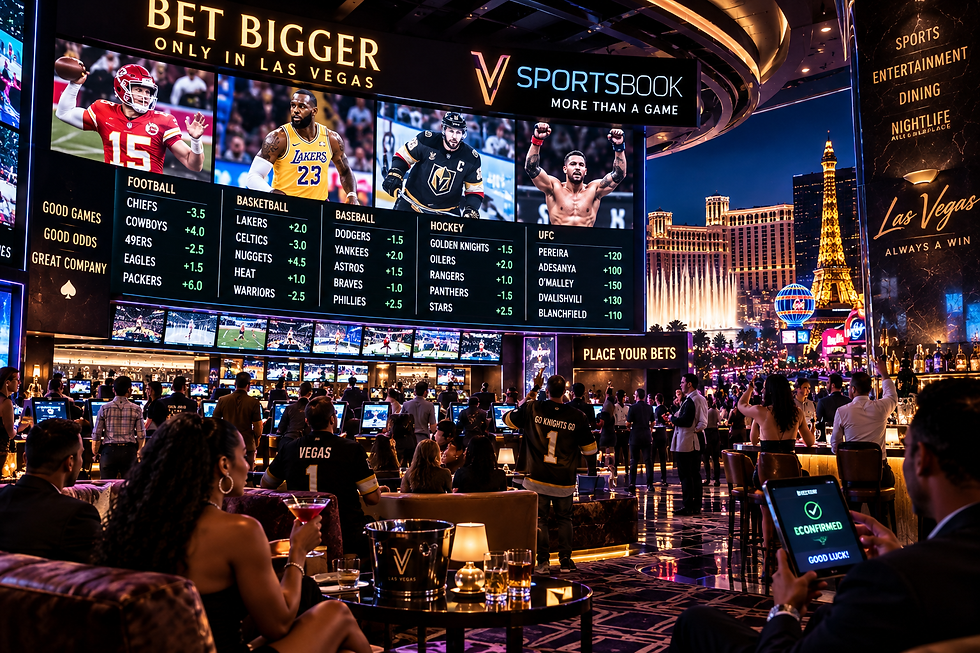
At the same time, Las Vegas has undergone another extraordinary transformation.
Professional sports.
The Vegas Golden Knights.
The Raiders.
The Las Vegas Aces.
Formula 1.
UFC.
Major boxing.
And the planned arrival of Major League Baseball's Athletics.
This creates a completely different entertainment economy.
A resident theatrical production needs people in seats night after night.
A championship fight needs to create extraordinary demand one night.
Formula 1 can generate massive attention around one weekend.
A stadium concert comes in, fills tens of thousands of seats and leaves.
That doesn't mean traditional Vegas entertainment disappears.
But it does mean the economics have changed.
THE NEW VEGAS MAY BE ABOUT THE EVENT

Old Las Vegas essentially told America:
“Come here because entertainment lives here.”
The emerging Las Vegas increasingly says:
“Come here because something enormous is happening here this weekend.”
Those statements sound similar.
They're not.
One model depends heavily upon a permanent ecosystem of working entertainers.
The other can increasingly revolve around superstar acts, international sports, massive concerts and temporary destination events.
And caught somewhere between those two models is the working entertainer.
Too talented to quit.
Not famous enough to fill Allegiant Stadium.
Perfectly capable of filling a showroom.
If somebody gives them the room.
AND THIS IS WHERE VEGAS HISTORY COMES FULL CIRCLE
I keep thinking about Harrison's Guest House.
About Sammy Davis Jr.
Nat King Cole.
Pearl Bailey.
About performers leaving casinos after entertaining the very customers who were permitted privileges they themselves didn't have.
And again, I want to be crystal clear:
The racial segregation Black entertainers endured is not equivalent to today's disputes over compensation and opportunity.
But there's a thread connecting these stories.
It's the question of value.
Then:
We value what you do for us—but do we value you?
Today:
We value entertainment—but are we sufficiently investing in entertainers?
Different eras.
Different circumstances.
Different stakes.
But an uncomfortable question, nonetheless.
A CITY CAN MAKE BILLIONS WHILE ITS ARTISTS STRUGGLE
That's perhaps the greatest misconception in this entire discussion.
Las Vegas doesn't have to collapse financially for working entertainers to struggle.
Both realities can exist simultaneously.
Casinos can generate billions.
Hotels can charge premium rates.
Sports can flourish.
Celebrity residencies can thrive.
Superstar DJs can pack nightclubs.
And an extraordinarily talented singer can still be sitting at home wondering where the next paying gig is coming from.
Corporate prosperity does not automatically trickle down to artistic opportunity.
So perhaps asking whether Las Vegas is “dying” is the wrong question.
The better question is:
Who is prospering in the new Las Vegas entertainment economy—and who is being left outside the showroom?
LAS VEGAS DOESN'T HAVE A TALENT PROBLEM
Las Vegas isn't running out of singers.
It isn't running out of dancers.
It isn't running out of comedians.
It isn't running out of musicians.
It isn't running out of personalities.
It isn't running out of people who can command a stage.
The concern is whether the infrastructure supporting those people is shrinking.
Because there is a difference between an entertainment industry thriving and entertainment corporations thriving.
There's a difference between bringing famous people into Las Vegas and creating an environment where the next famous person can emerge from Las Vegas.
Black performers once fought to be treated equally inside buildings that depended on their talent.
Today's entertainers are fighting a very different battle—but many are nevertheless asking whether those buildings still understand the value of investing in the human beings onstage.
THE ENTERTAINMENT CAPITAL NEEDS ITS ENTERTAINERS
Mad Apple is gone.
Awakening closes October 10.
Hundreds of entertainment workers are facing transition.
Sports are exploding.
Mega-events are multiplying.
Celebrity-driven entertainment remains powerful.
Technology is transforming the business.
And working entertainers are trying to determine where they fit into the next version of Las Vegas.
Las Vegas will survive.
I'm not particularly worried about Las Vegas.
I'm worried about the entertainers.
Because before there was a Sphere, there was a stage.
Before the billion-dollar stadiums, there were showrooms.
Before social-media follower counts determined someone's perceived marketability, somebody had to walk onto a stage and prove they could entertain the people sitting in front of them.
And long before today's Las Vegas existed, Black entertainers including Sammy Davis Jr., Nat King Cole, Pearl Bailey, Lena Horne, Harry Belafonte, Count Basie, Josephine Baker, Louis Armstrong and countless others helped establish the entertainment tradition upon which this city built its reputation.
Some weren't even allowed to sleep where they worked.
They still performed.
They still filled rooms.
They still helped build the legend.
And they helped force the city to change.
So maybe The Fabulous Karmyn has given us the perfect sentence for this moment:
“Vegas doesn’t need less entertainment. It needs to start betting on entertainers again!”
Maybe that's it.
Maybe the Entertainment Capital of the World doesn't need to rediscover entertainment.
Maybe it needs to remember who made it entertaining in the first place.
— Miss Hollywood The MissHollywoodMediaNetwork
ABOUT THE AUTHOR
Miss Hollywood is a media personality, writer, producer, recording artist, and founder of The MissHollywoodMediaNetwork, an independent multimedia platform covering news, entertainment, culture, crime, lifestyle, music, and original storytelling.
As host of The Daily News Wrap with Miss Hollywood and Conversations with Miss Hollywood, she combines reporting, research, commentary, and candid conversation to examine stories beyond the headline. Her work frequently explores the people and perspectives that can be overlooked in mainstream coverage—from entertainers and working creatives to communities whose history deserves a larger spotlight.
Miss Hollywood is also the writer and producer behind original projects including Sam’s Diary and Cruise Ship unSOLVED, while continuing to expand The MissHollywoodMediaNetwork across digital media, film, music, and documentary storytelling.
Her approach is simple: tell the story, provide the context, and never be afraid to ask the question everyone else is thinking.

Miss Hollywood — Founder of The MissHollywoodMediaNetwork, host, writer and producer bringing independent perspective to news, entertainment, culture and original storytelling.


I will like to say that I really enjoyed Karmy story her perspective about the investing is talent is so true…Its 2026 and time to give the talent what they deserve and there worth because its much harder to make it now and days and be recognized..